Holy Carp — Checking in on Lake Ellyn
By Elizabeth, Intern, Go Green Glen Ellyn
Being in the Great Lakes region we are fortunate to have plenty of lakes in our vicinity that provide both beauty and freshwater resources, so it is up to us to protect them. It starts right here in Glen Ellyn with our very own Lake Ellyn! There’s so much to learn so let’s dive in.
Every location, no matter how near or far you are from water, is located in a watershed. A watershed is an area of land where all streams and rainfall drain into one outlet. For instance, a reservoir, a lake, a river or any other body of water. All water flow is connected. Therefore we must be aware of what goes into our waterways, Lake Ellyn is no exception.
We spoke with Chris Gutman, the Manager of Natural Areas and Outdoor Education, to learn more about the challenges facing Lake Ellyn right now. He told us that “Lake Ellyn’s watershed is much bigger than most residents realize. A large portion of Glen Ellyn drains into the lake.” So, runoff is the biggest problem facing Lake Ellyn right now.
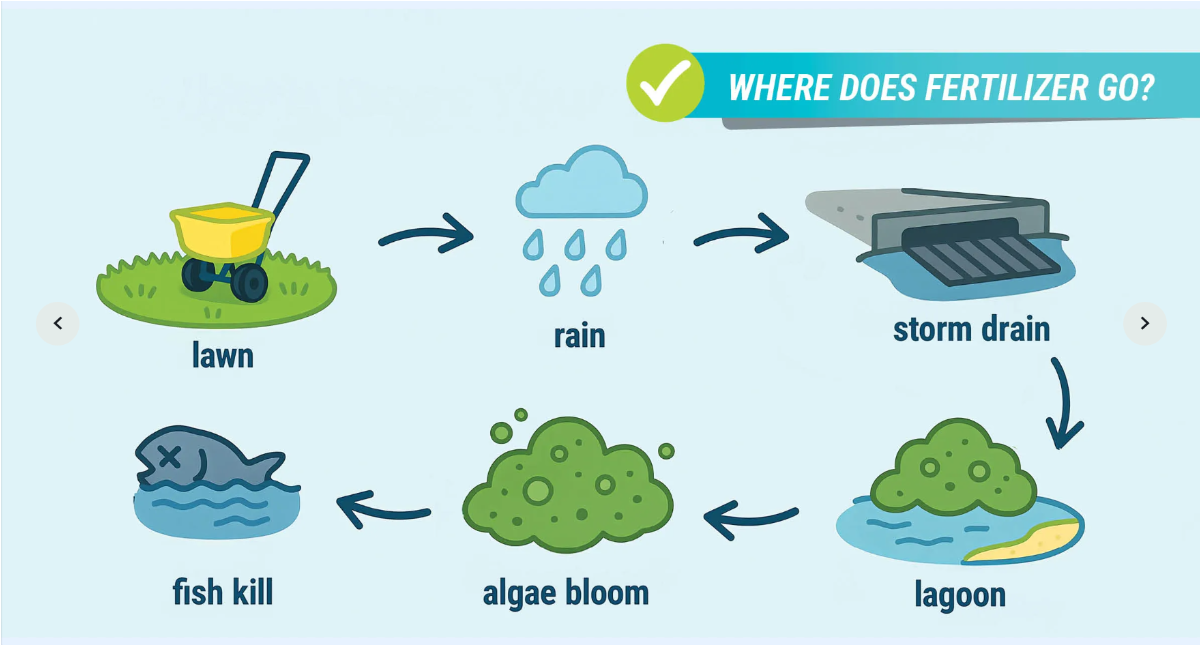
When people add fertilizer, herbicides or any other type of chemicals to their yard it's not going to be fully absorbed. When rain or any other type of water comes, some of the chemicals or even little silt particles are going to wash away into Lake Ellyn. That will also degrade your soil quality by upsetting its biological balance. If you are interested in reading further on soil conservation, check out our most recent newsletter here.
Graphic Credit: Lagoon Loyal, https://www.lagoonloyal.com/blog/skip-fertilizer-to-help-the-
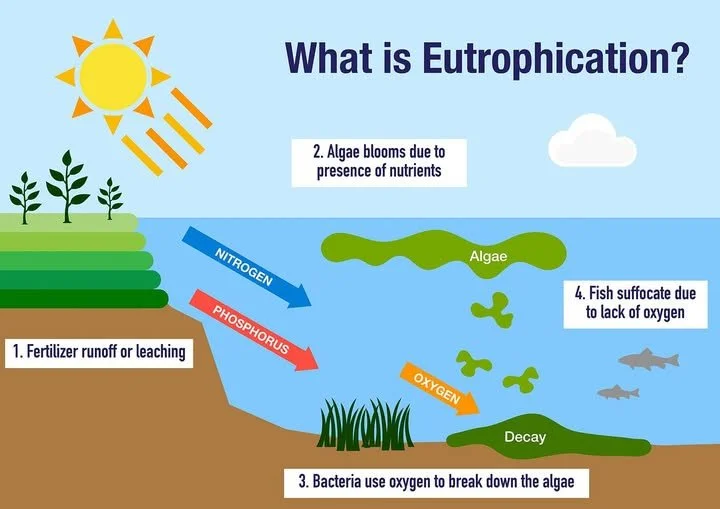
These then lead to eutrophication, or the aging of Lake Ellyn. The water becomes over saturated with nutrients like phosphorus and nitrogen which cause algal blooms. These green blobs block out sunlight and cause the fish to die, decreasing biodiversity within the lake. When silt washes away, the lake becomes cloudy and unable to support life anymore.
Graphic Credit: My Pure Water, https://mypurewater.com/
There’s also the possibility that the chemicals leach into groundwater, the water that exists underground in saturated zones, depleting our supply of drinkable water.
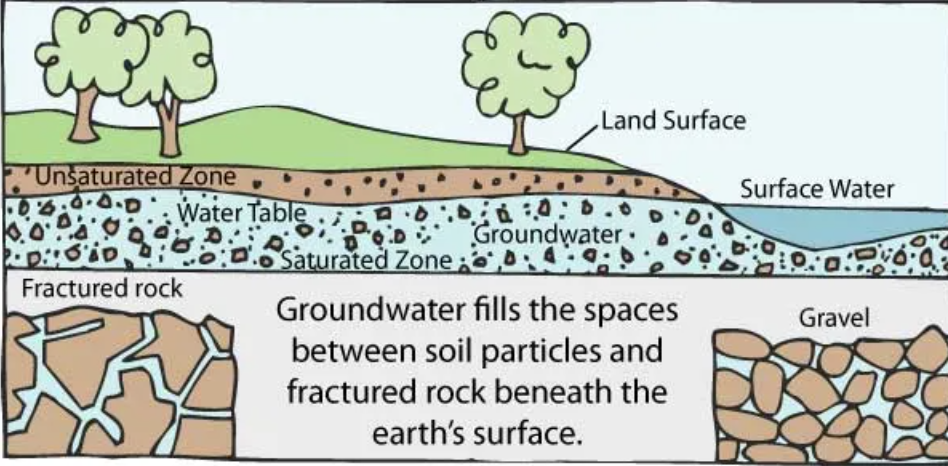
Credit: Groundwater Foundation, https://groundwater.org/what-is-groundwater/
There is also the factor of single-use plastic pollution (mostly food containers) that litter the lake and kill or injure wildlife. There’s a lot of moving parts in our watershed, but you can make a difference!
How some simple shifts can make a big difference!
According to Chirs Gutman, “the solution with the greatest impact would be reducing or eliminating turf in yards and replacing it with native plants." He notes that they require little to no care after they are planted and no fertilizer at all. This would help cut down on algal blooms and eutrophication very quickly.
However, he remains realistic that this is not a feasible solution for everyone. He first recommends replacing traditional lawn grass with plants that look like a lawn, but don’t need to be fertilized. He highlights clover varieties as becoming more popular and don’t look that different from a traditional lawn.
Next, a simpler switch would be applying only the minimum amount of fertilizer necessary. Your lawn can only take so much before the rest washes off, so don’t use any more than needed. If you do need to apply fertilizer, take note of the weather conditions. Fertilizer is most effective in the fall and you’ll avoid fertilizer burn. Try and fertilize in the fall and spring. Additionally, try and avoid fertilizing right before and right after it rains, because the amount of water that runs off into the lake increases.
For plastic pollution, simply dispose of your plastics in the appropriate recycling bins by Lake Ellyn or minimize the use of single-use plastics in food.
Through some simple switches, you can make a positive difference for Lake Ellyn and all the wildlife that depend upon it.
If you’re interested in learning more you can check out these links: here, here and here.