by Karin
On a beautiful sunny day in late July, I had the chance to tour Midwest Organics Recycling in McHenry to see what happens after our food scraps and yard waste leave the curb or the landscaper's truck. The Illinois Foodscrap and Composting Coalition (IFSCC) and Go Green IL organized the trip. We were joined by a large contingency from SCARCE as well as several state and local legislators, including our area state Rep, Margaret DeLaRosa.
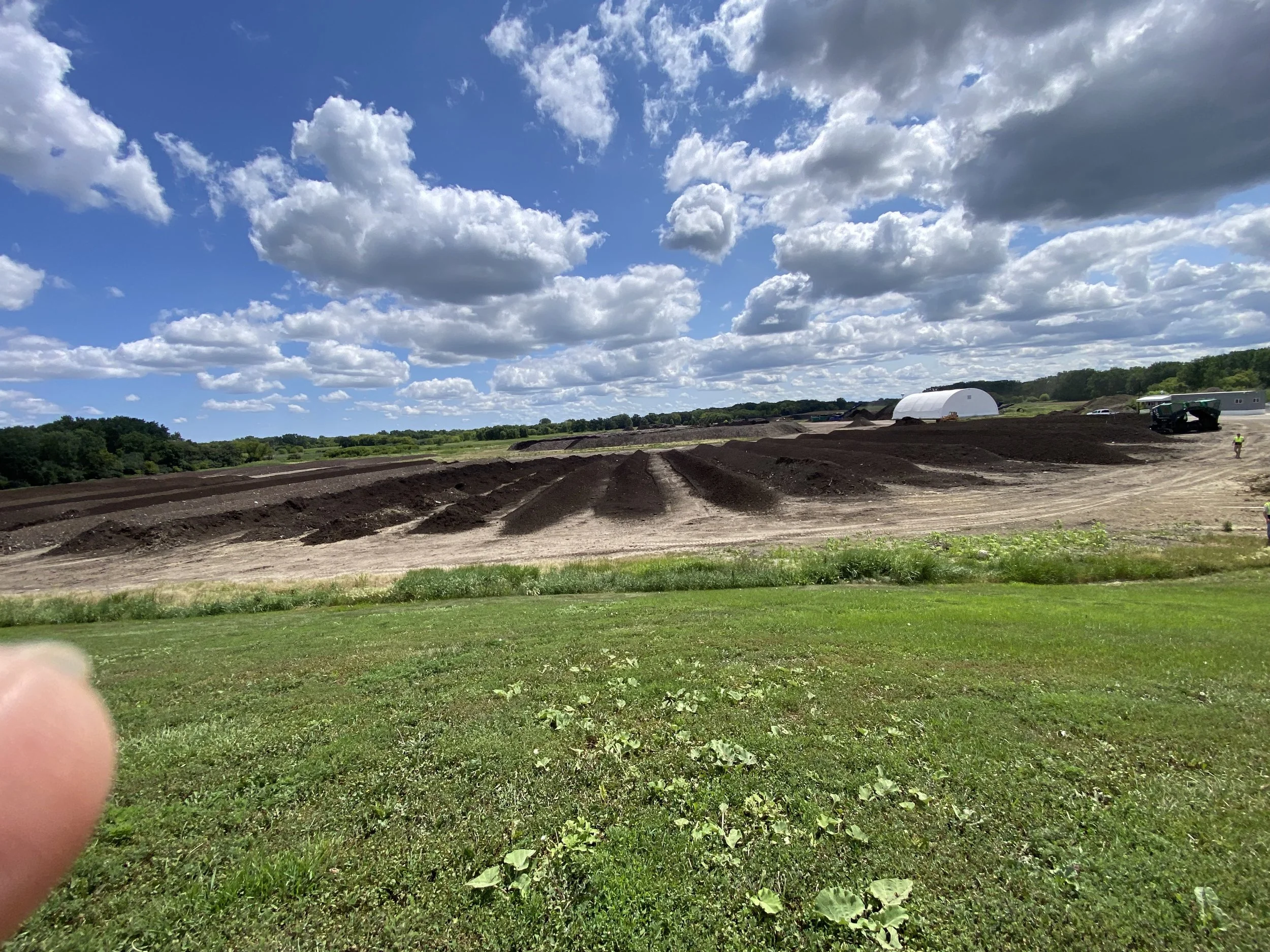
The first thing that struck me was the scale (you thought I was going to say smell?) Spread across more than 50 acres, the facility processes an astonishing amount of organic material every year—everything from grass clippings and leaves to food scraps collected from homes, schools, restaurants, and businesses, plus manure from the farm next door. Instead of ending up in a landfill where they produce methane (a potent greenhouse gas), these materials are transformed into rich, living compost that helps grow healthier plants and healthier soils.
Midwest Organics Recycling (MOR) began as a way to find a sustainable use for dairy manure while helping preserve one of the last working dairy farms in rapidly developing McHenry County. Over the years, it has expanded into one of northern Illinois' premier composting facilities that is open all year long.
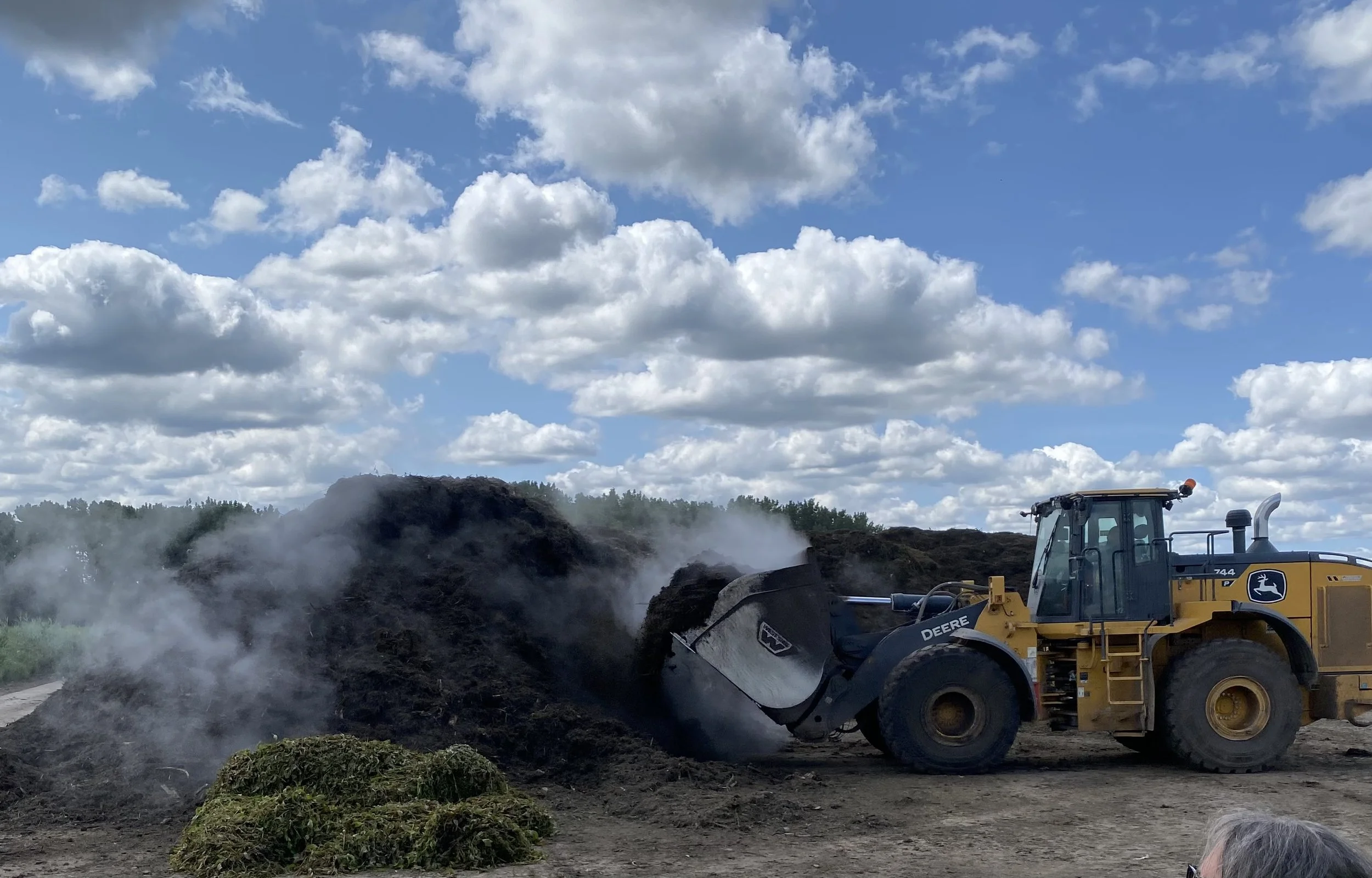
Watching the composting process was like seeing nature on fast-forward.
Large branches and woody material are first ground into smaller pieces. Then those carbon-rich materials are blended with nitrogen-rich ingredients like food scraps and manure from the adjacent dairy farm in balanced proportions.
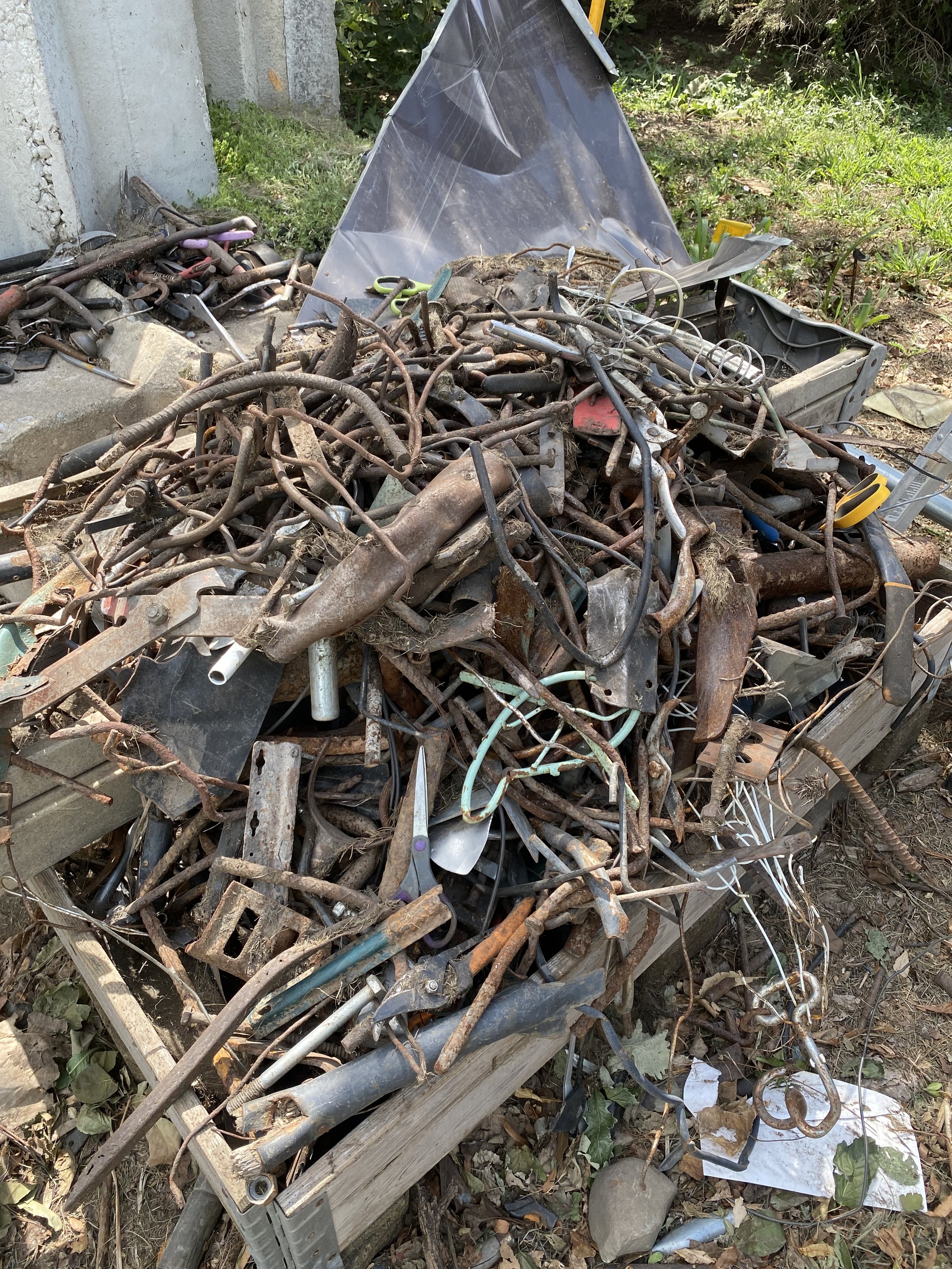
PRO TIP: Be sure to check your yard waste bags for any clippers, saws, etc! There is a large pile of mangled metal at the facility as these items ride in with yard waste and get caught in the machinery, later discarded for metal scrap (see pics).
The ground up mixture is then formed into long rows called windrows that are about 16 feet wide and 8 feet high which allow MOR to mix and test the material.
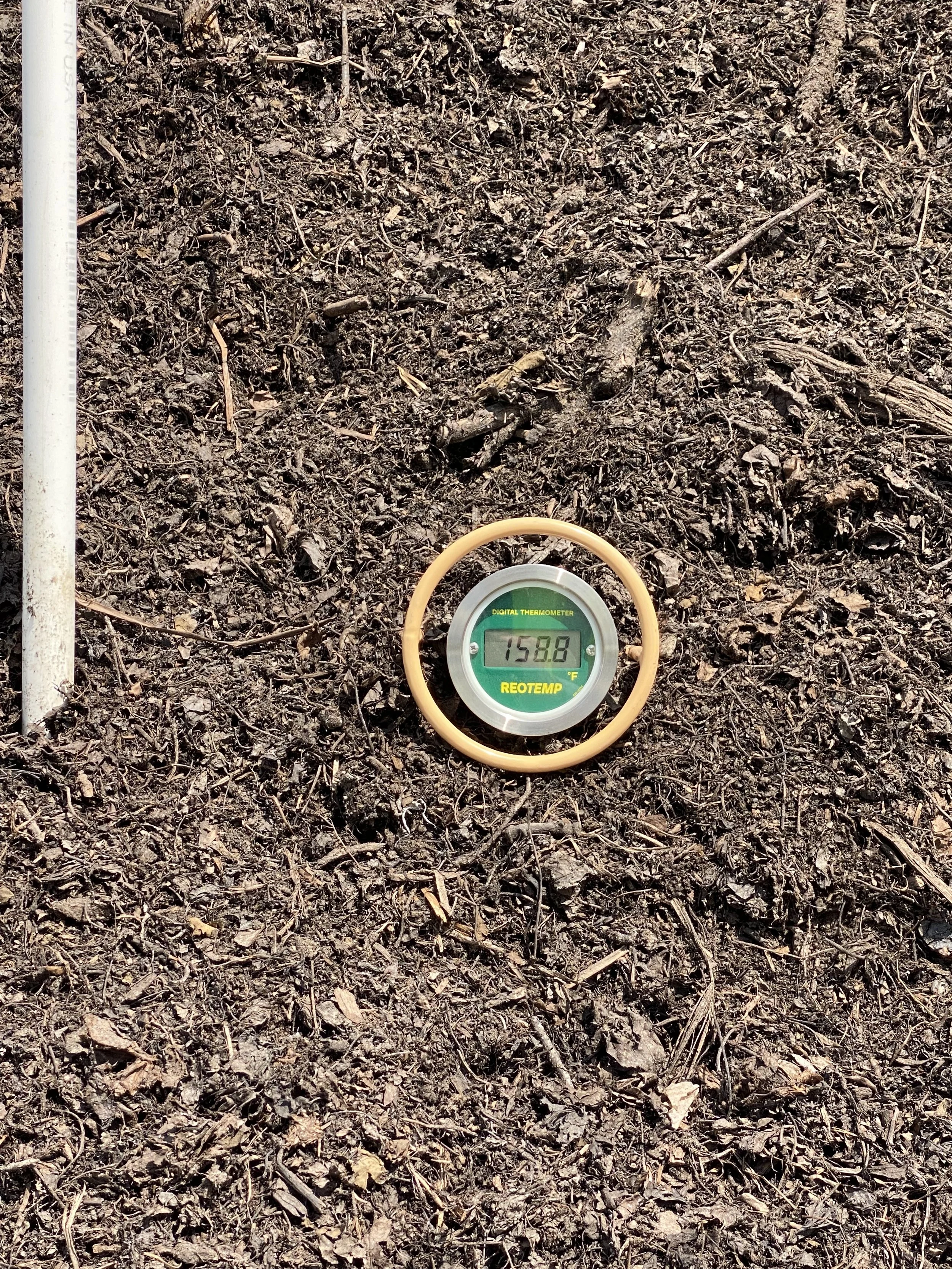
Then the microbes take over! Millions of naturally occurring bacteria, fungi, and other microorganisms start to break everything down. Their activity generates heat with temps inside the piles reaching between 131°F and 181°F. This is hot enough to destroy weed seeds and harmful pathogens during the decomposition process.
PRO TIP: I always avoided putting any invasives in my GE curbside compost bin but MOC reassured me that these get cooked and sterilized and will not spread.
Specialized machines that look like giant beetles regularly turn the windrows, adding oxygen to help decomposition. Water is added when necessary to keep conditions just right (although when there is too much rain, they admit to a swampy, muddy mess!)
After months of monitoring, turning, and curing, the finished compost is dark, crumbly, and earthy-smelling, waiting for your garden!
PRO TIP: There are actually two kinds of finished compost, fine and course. Fine is more refined and has ‘cooked’ a little longer. Course still may have small pieces of wood and other organic material, which will continue to decompose in your garden. It’s best used in the fall.
A True Circular Economy
It was also interesting to consider the ins and outs (literally!) of composting as a business and as an important part of the circular economy. Compost facilities like MOC generate most of their revenue by charging what are called ‘tipping fees’ to accept organic materials from waste haulers, landscapers, municipalities, businesses, and residents. They also sell the finished compost to gardeners, landscapers, farmers, and municipalities. We saw many trucks and cars both tipping and collecting finished compost while we were there.
Building a strong market for compost requires more than creating a big pile of it. In many states, public policies encourage or require compost-amended soils for large construction, landscaping, and infrastructure projects as it is becoming more widely known that compost (you know it!) improves soil health, reduces erosion, increases water retention, and helps establish healthier plants and trees. Illinois needs to strengthen these types of policies locally and state-wide, something the IFCC is working on.
Here in the Prairie State we have a heritage of great soil, so we shouldn't take its health for granted! Read on for how you can do your part.